
FAQs
by Shavonne Yu & Mika Dilig (Co-founders, Co-chairs)
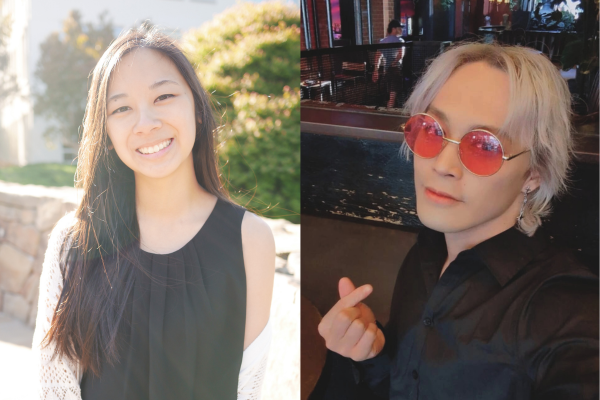
These thoughts below are our own and do not reflect the opinions of every AAPI person ever. Thanks for reading!
What are a couple issues that AAPI face in the games industry specifically?
- Asian hands – technical prowess at games that is unfairly attributed to race and not achieved through individual merit
The Trophy Called “Asian Hands” by Prabhash Ranjan Tripathy - Techno-orientalism – the cyberpunk aesthetic fetishized with Asian people or language removed, placed in lesser positions, or are antagonized
1000x RESIST “Reclaiming the cyberpunk aesthetic” – Remy Siu - The bamboo ceiling – concept that describes the barriers faced by many Asian Americans in the professional arena, such as stereotypes and racism, particularly with ascending to top executive and leadership positions
Cracking the Bamboo Ceiling – The Atlantic, Wikipedia
…not to mention other issues that AAPI face in all forms of media:
- Equating AAPI with Asian – using ‘AAPI’ interchangeably with being holistically Asian, which undermines diasporic experiences of discrimination that we share when living in a different country from our heritage
- Alienation as perpetual foreigners- always being seen as alien outsiders in this country, always more connected to their motherland than American soil, which is not the case for many. This leads to physical violence and harm Survey finds ‘perpetual foreigner’ stereotype persists for Asian Americans – NextShark
- Asia as a monolith – even within Asian representation, East-Asian representation is much more common than South-East Asian. Representation for some of us doesn’t mean representation for all
- Exoticization and fetishization of Asian women – historically game characters have adhered to one-dimensional “dragon lady” and “lotus blossom” stereotypes, which portrayed Asian women as either dangerously seductive manipulators or obediently delicate sweethearts with no in-between
- Emasculation of Asian men – the stereotype of Asian American men as “emasculated”, “weak”, and “effeminate” can be traced back to the 1882 Chinese Exclusion Act when men were not allowed to bring along their wives and families
‘Good-looking for an Asian’: how I shed white ideals of masculinity – The Guardian
If you’re interested in learning more, we recommend reading the book Made in Asia/America Why Video Games Were Never (Really) about Us. Also, talking to your AAPI friends! Please talk to your friends 🙂
Why does AAPI in Gaming use the term ‘AAPI’ and not ‘APIA’, ‘APA’, or ‘API’?
AAPI (Asian American Pacific Islander) is the most recognizable acronym that is already used by other social justice organizations in the US.
APIA = Asian Pacific Islander American
APA = Asian Pacific American
API = Asian Pacific Islander
Where does the word AAPI originate from?
The US federal government defines the term AAPI to include “all people of Asian, Asian American, or Pacific Islander ancestry who trace their origins to the countries, states, jurisdictions and/or the diasporic communities of these geographic regions.”
The term is used in reference to Asian/Pacific American Heritage Week, the first ten days of May, established in 1978 by a joint resolution in the United States Congress. The commemorative week was expanded to a month (Asian Pacific American Heritage Month) by Congress in 1992. The month of May was chosen to celebrate the first immigration of Japanese-Americans on May 7, 1843, and to honor the Chinese-Americans who contributed to the transcontinental railroad which was completed on May 10, 1869.
Why don’t you advocate for Asian or Pacific Islander folks who do not identify as being part of the diaspora?
We want to specifically focus on the diasporic experience. A core value of this org is establishing that the AAPI identity is a third identity, distinct and deserving of its own celebration. Many folks feel like they need to choose a side and be more one or the other, Asian/PI or American. We believe that isn’t the case – being a third culture kid brings its own flavor to the table.
We don’t want to be seen as a monolith for that reason because it erases all the struggles we go through our daily lives, not to mention the issues we also face in the countries of our heritage. We understand that all people matter but not everyone experiences the same racism, prejudice, discrimination, etc.
One way to look at this is to other diasporic communities in a different medium for clarity; today, it would be strange to spotlight traditional African music over Hip Hop, Jazz, and other distinctly Black American genres during Black History Month, as Black History Month is historically an American celebration and is about Black folks in America, not Black folks in Africa.
What does Asian-American music sound like? It isn’t always in a pentatonic scale, or only uses traditional instruments. It might sound more like keshi, 88rising, or Japanese Breakfast, for example.
Then, by extension, what does this look like for AAPI games? This is what we as an org are shaping, right now, today.
Are allies welcome?
Allies are always welcome in our community. Respectful, curious conversations will pave the path forward.
 AAPI In Gaming